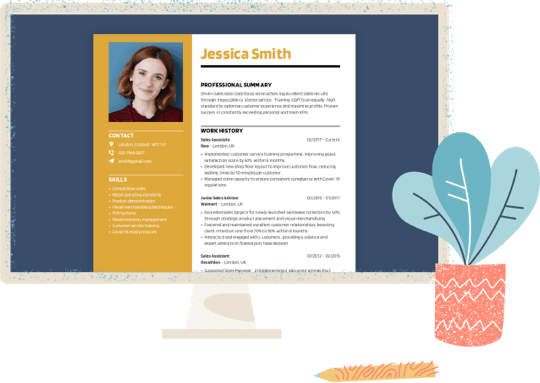
Such CVs are especially popular in industries where creativity, branding, or visual communication plays an important role. Fields such as graphic design, marketing, media, photography, fashion, UX/UI design, and advertising often encourage visually expressive applications.
STEP 1Choose the right creative CV template
The design of your CV should match both your industry and your level of experience. A graphic designer may benefit from a highly visual layout, while a marketing professional or UX designer might need something cleaner and more structured.
The goal is to choose a creative CV template that reflects your personal brand. And the best place to find these templates is the MyPerfectCV CV builder.
STEP 2Add your contact details
Even in a visually creative layout, your contact information should remain simple and easy to find. Include:
- Your name
- Phone number
- Professional email address
- LinkedIn profile or portfolio link
Creative professionals can also include links to platforms such as Behance, Dribbble, or personal websites if they strengthen the application.
Visual CV—contact details example:
Kiara Connell
kiara.connell@example.co.uk
07912 345678
linkedin.com/in/connell-kiara123
kiaraconnell.portfolio.com
STEP 3Structure your work experience
Include your work history, starting with your most recent or current job or project. Use bullet points starting with action words to highlight your impact. Whenever possible, quantify achievements that directly relate to your duties.
For example, instead of just saying that you’re responsible for managing social media, you can write, “Increased social media engagement by 35% through targeted content strategy.“
Visual CV—work experience example:
Work Experience
Social Media Manager
July 2024–June 2026
Creative Marketing Agency, London
- Collaborated with graphic designers and copywriters to create visually compelling posts that increased brand awareness metrics by 25%.
- Developed and implemented a data-driven social media strategy that increased follower growth by 35% across Instagram, Twitter, and LinkedIn.
- Led a content campaign that increased client engagement rates by 40% in six months.
STEP 4List key skills on your visual CV
A strong creative CV should balance hard and soft skills. Hard skills are measurable, job-specific abilities such as Adobe Photoshop, video editing, SEO, UX design, or copywriting. Soft skills focus more on how you work, including communication, adaptability, creativity, teamwork, and problem-solving.
It’s also important to tailor your key skills section to the job description. Carefully review the posting and identify the keywords, tools, and abilities the employer emphasises most. If the role repeatedly mentions branding, social media strategy, or Figma, those skills should appear naturally throughout your creative CV.
Also, employers love seeing real results. Instead of simply listing skills, support them with examples or accomplishments that demonstrate how you’ve applied them professionally.
Creative CV—example of skills:
Key Skills
- Communication: Collaborated with 25+ clients and production teams to deliver photography projects aligned with brand expectations and campaign goals.
- Photography: Experienced in portrait, event, commercial, and product photography across studio and on-location environments.
- Photo Editing: Advanced editing and retouching skills using Adobe Photoshop, Lightroom, and Capture One to produce publication-ready visuals.
- Lighting Techniques: Skilled in creating professional lighting setups using both natural and artificial lighting to achieve consistent visual quality.
- Digital Workflow: Managed and organised image libraries containing 10,000+ digital assets while maintaining efficient editing and delivery workflows.
- Time Management: Successfully balanced multiple concurrent shoots and editing deadlines while consistently delivering high-quality work on schedule.
STEP 5Showcase your education
Your education section should support the overall style and professionalism of your creative CV without overwhelming the page. List your qualifications in reverse chronological order, including:
- Degree or qualification title
- Institution name
- Dates attended
If you’re a recent graduate or applying for junior creative roles, you can also include:
- Relevant modules
- Creative projects
- Academic achievements
- Portfolio-related coursework
For more experienced professionals, this section can remain shorter, allowing your work experience and achievements to take priority.
Creative CV example—education section:
Education
Bachelor of Arts: Graphic Design
Art Institute of London, London
2020–2023
- Coursework included typography, digital design, motion graphics, and user interface design.
- Senior project selected for display in the university’s annual design showcase.
STEP 6Add bonus sections
Bonus sections can help strengthen a creative CV format by showing additional expertise, certifications, or achievements relevant to creative industries.
Common bonus sections include:
- Certifications and courses
- Awards and achievements
- Known foreign languages
- Volunteer work
- Freelance projects
- Publications or exhibitions
The key is relevance. Every additional section should support your application and strengthen your personal brand rather than simply fill space.
Creative CV—examples of additional sections:
Certifications & Courses
- Adobe Certified Professional — Visual Design Using Photoshop, 2025
- Google UX Design Professional Certificate, 2024
- Domestika — Editorial Design for Branding Projects, 2023
Awards & Exhibitions
- Featured in the 2023 Emerging Designers Showcase at the University of the Arts London
- Winner — Student Branding Concept Competition, 2022
STEP 7Conclude with a strong personal profile
I often recommend writing your CV’s personal statement last, as it serves as a concise overview of what you’ve already included in other sections of your CV. This section is your chance to grab the recruiter’s attention immediately by summarising your key achievements and what you can bring to the role.
Avoid generic phrases like “hard-working professional”, “team player”, or “proven track record of…” Instead, focus on specific strengths and measurable achievements whenever possible.date.
Creative CV example—personal statement:
Personal Profile
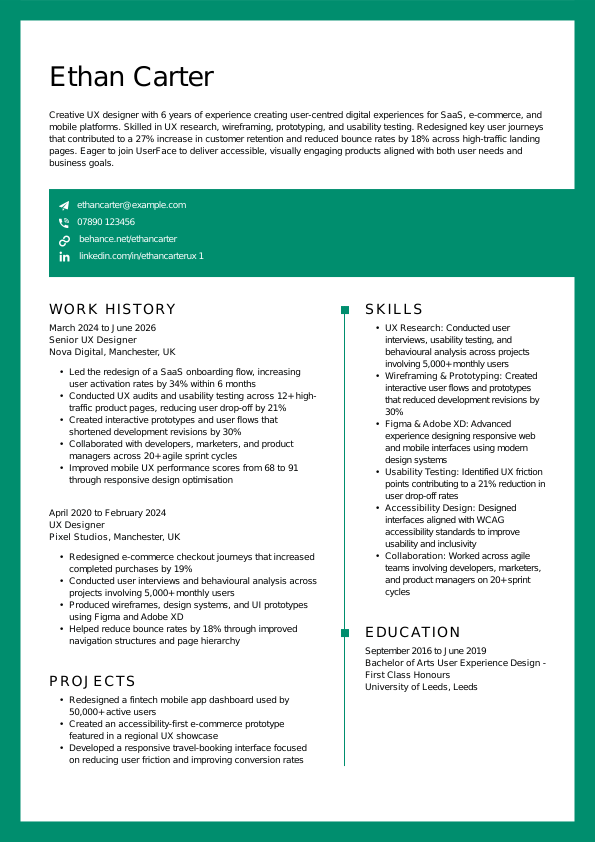
Creative UX designer with 5 years of experience making user-centred digital experiences for web and mobile platforms. Skilled in UX research, wireframing, prototyping, and usability testing, with a strong focus on improving usability, engagement, and conversion rates through intuitive design solutions. Redesigned key user flows that contributed to a 27% increase in customer retention and reduced bounce rates by 18% across high-traffic landing pages. Looking to join Company ABC to deliver accessible, visually engaging products aligned with both user needs and business objectives.