
Tutor CV example
Empower students and advance your career. Build a professional tutor CV that highlights your expertise and passes recruiter tests using our expert-led guide.

- Our customers have been hired by : *Foot Note
An effective tutor CV displays a track record of helping students succeed. It highlights your specific areas of expertise, supported by a solid work history in private tutoring, schools, and colleges. Qualifications like specific teacher training and certification or university degrees, which you should also include on your tutor CV, show that you have the academic credentials required.
Whether it’s a professional tutor job description or an entry-level role, our tips and winning CV examples will help you create a CV that will impress recruiters and position you as a top candidate. From effectively structuring your CV to demonstrating the right combination of hard and soft skills, we’ll guide you through creating a document that highlights your unique value.
In this guide, we’ll cover:
- Sample tutor CV
- Tutor CV templates
- The best format for your tutor CV
- How to write an effective CV for a tutor
- Top dos and don’ts for tutor CV writing
- Your tutor CV questions answered
Smarter writing with built-in AI
Get instant, high-quality text suggestions tailored to your specific industry.
SEARCH ALL CV EXAMPLES
Sample tutor CV
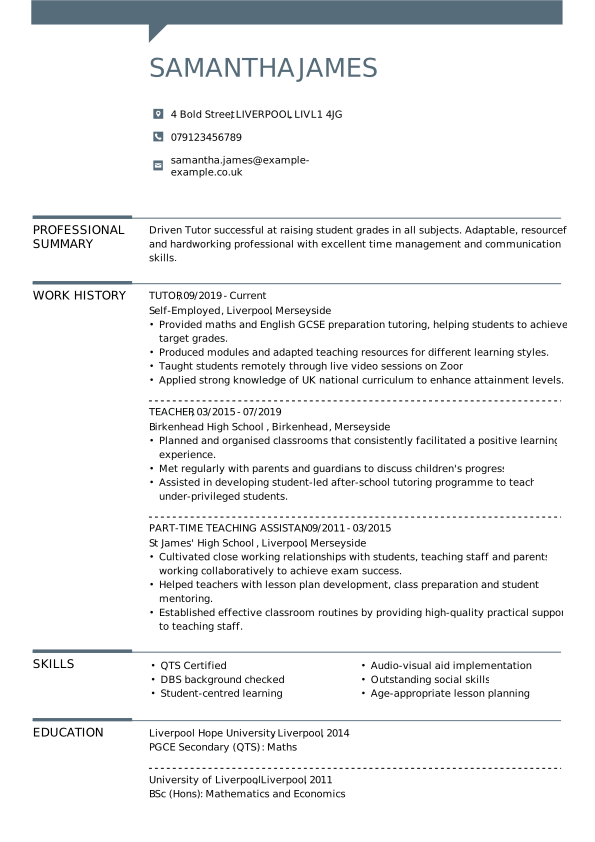
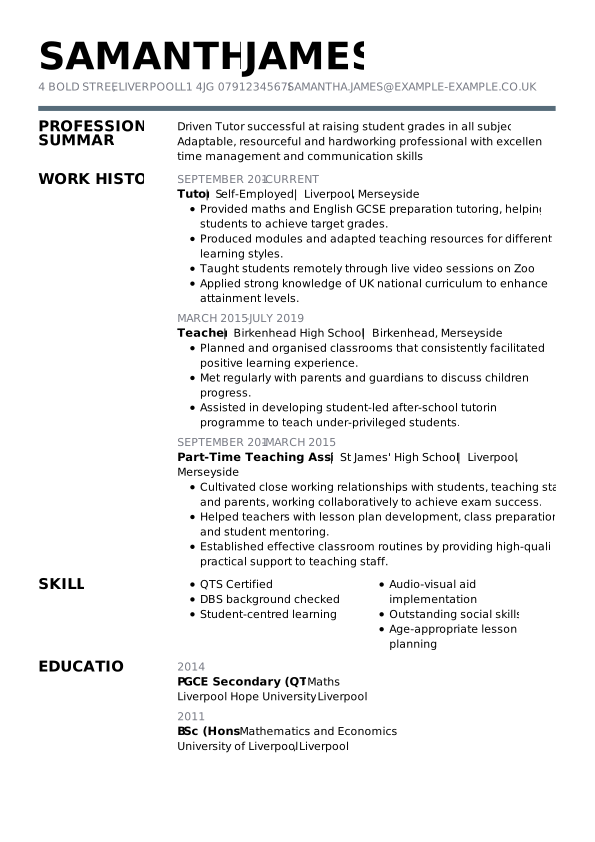
Samantha James
4 Bold Street
Liverpool LIV L1 4JG
07912 345678
samantha.james@example-example.co.uk
PROFESSIONAL SUMMARY
Driven Tutor successful at raising student grades in all subjects. Adaptable, resourceful and hardworking professional with excellent time management and communication skills.
WORK HISTORY
Tutor (09/2019 – Current)
Self-Employed, Liverpool, Merseyside
- Provided maths and English GCSE preparation tutoring, helping students to achieve target grades.
- Produced modules and adapted teaching resources for different learning styles.
- Taught students remotely through live video sessions on Zoom.
- Applied strong knowledge of the UK national curriculum to enhance attainment levels.
Teacher (03/2015 – 07/2019)
Birkenhead High School, Liverpool, Merseyside
- Planned and organised classrooms that consistently facilitate a positive learning experience.
- Met regularly with parents and guardians to discuss children’s progress.
- Assisted in developing student-led after-school tutoring programme to teach underprivileged students.
Part-Time Teaching Assistant (09/2011 – 03/2015)
St James’ High School, Liverpool, Merseyside
- Cultivated close working relationships with students, teaching staff and parents, working collaboratively to achieve exam success.
- Helped teachers with lesson plan development, class preparation and student mentoring.
- Established effective classroom routines by providing high-quality practical support to teaching staff.
SKILLS
- QTS Certified
- DBS background checked
- Student-centred learning
- Audio-visual aid implementation
- Outstanding social skills
- Age-appropriate lesson planning
EDUCATION
Liverpool Hope University, Liverpool, 2014
PGCE Secondary (QTS): Maths
University of Liverpool, Liverpool, 2011
BSc (Hons): Mathematics and Economics
Tutor CV templates
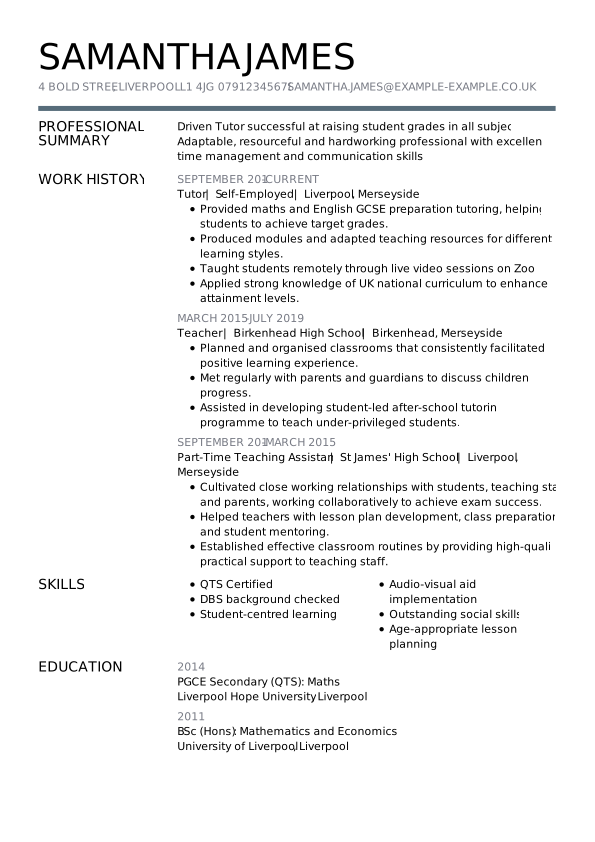
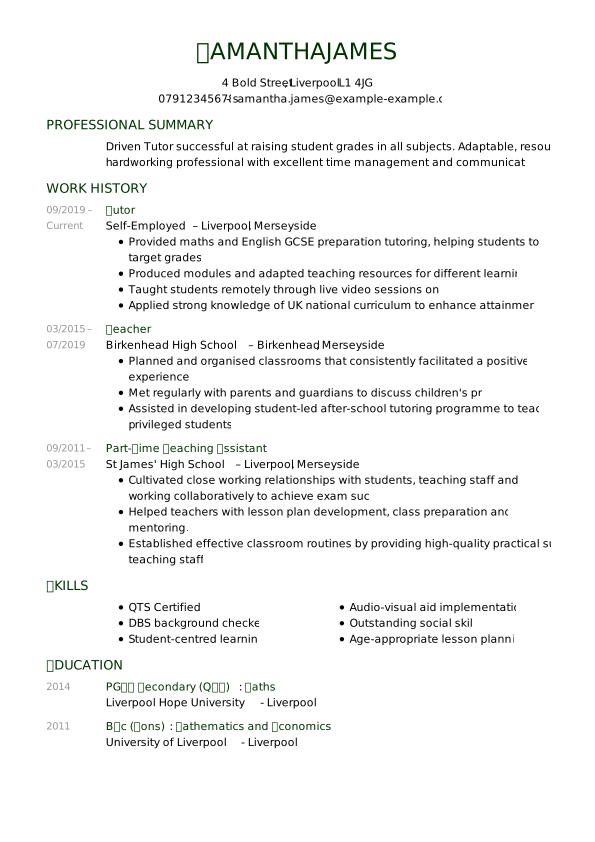
With so much competition for private tutoring jobs, a basic Word document simply won’t cut it. The best tutor CV templates use professional colours like grey and navy with page breaks, margins, and neat design features to guide recruiters through the qualifications, skills, duties, and responsibilities of a private tutor.
The best format for your tutor CV
Not all lessons should be taught in the same way – and not all CVs should be structured the same. If you’ve got plenty of teaching and tutoring experience, a reverse chronological format is best. This format highlights your experience as the focal point of the document, starting with your most recent role and working backwards. It allows recruiters to quickly see your career progression and achievements in previous roles, making it ideal for experienced tutors. To summarise, choose reverse chronological if:
- You have extensive tutoring or teaching experience to highlight.
- Your work history includes measurable achievements, like successful exam preparation.
- You want to demonstrate a steady career progression in education or a related field.
If you’re writing a private tutor CV without any experience, a skills-based format is often more effective. This format focuses on showcasing your knowledge of the subject, essential tutoring skills such as communication and organisation, and any relevant academic achievements. For example, you can include coursework, certifications, or volunteer work that demonstrates your ability to teach effectively. Choose this CV format if:
- You’re completely new to tutoring and/or don’t have formal teaching experience.
- Your strengths lie in subject-matter expertise or academic achievements.
- You’ve gained formal teaching experience but it was through volunteering or internships.
How to write an effective CV for a tutor
In this section, we’ll show you how to create a compelling CV that highlights your skills, qualifications, and tutoring experience. From writing a strong CV personal statement to detailing your work history, we’ll take you step-by-step through each section of your CV, providing valuable tips to help you stand out to recruiters.
- Adding contact details to your tutor CV
- Writing your tutor CV’s personal statement
- Adding an experience section to your tutor CV
- Top skills for your tutor CV
- Outlining education on a tutor CV
Adding contact details to your tutor CV
Your contact information is the first thing a recruiter will see on your CV. Start with your full name at the top of the page. Next, include your phone number, email address, and location. Make sure your contact details are accurate and easy to read. Keep the formatting clean and professional so that employers can easily get in touch with you.
Example of contact section for a tutor CV
Samantha James
4 Bold Street
Liverpool LIV L1 4JG
07912 345678
samantha.james@example-example.co.uk
Writing your tutor CV’s personal statement
Also known as your professional summary, this section should include a clear, concise summary of your main skills, qualities, and experience based on the tutor role description.
Mention the age groups you work with, the subjects you specialise in, and some key qualities like “dedicated”, “empathetic”, and “supportive”. Keep it down to two or three sentences so a big text block doesn’t drive recruiters away.
Example of personal statement for a tutor CV
Dedicated and experienced full-time tutor with over six years of experience teaching maths and science at GCSE and A-level. Proven success in helping students improve academic performance through personalised lesson plans and effective one-to-one coaching. Skilled in using digital tools to enhance online and face-to-face sessions, with a strong focus on building student confidence and encouraging independent learning.
OR
Motivated graduate with a passion for teaching and helping others succeed. Experience in peer tutoring during university with strong skills in explaining complex concepts clearly. Skilled in creating engaging study sessions and utilising online platforms to support student learning. Looking for part-time tutoring opportunities to earn extra income while gaining valuable experience in education.
Adding an experience section to your tutor CV
The experience section of your tutor CV is where you can showcase your practical teaching or tutoring background. Whether you’ve worked in schools, colleges, or tutored students privately, this section will help recruiters understand your practical experience and the impact you’ve had on students’ academic progress.
It’s important to highlight both your key responsibilities and measurable achievements, as this demonstrates your ability to effectively guide and support learners. This section should focus on your ability to engage with students, adapt teaching methods and create a positive learning environment – key qualities recruiters are looking for in a tutor.
Here are some practical tips for formatting this section:
- Start by listing your most recent or current role first and work backwards in reverse chronological order.
- Use bullet points to clearly outline your responsibilities and provide evidence of your successes, such as improved student performance, personalised learning plans or feedback from parents.
- If you don’t have much formal experience, consider volunteer work, internships, or extracurricular activities in which you have supported others in an educational setting.
Example of work experience for a tutor CV
Private Tutor (01/2022 – Current)
Self-employed, London
- Provided one-to-one tuition in maths and science to GCSE and A-level students, helping them to improve their exam results by up to 20%.
- Created personalised lesson plans tailored to each student’s needs, focusing on building confidence and reinforcing key concepts.
- Used online learning tools to supplement face-to-face sessions, providing interactive practice and remote support.
- Received positive feedback from parents and students for making lessons engaging and improving overall academic performance.
Teaching Assistant (06/2022 – 01/2022)
Greenfield Secondary School, Manchester
- Assisted classroom teachers in delivering mathematics lessons, helping students with complex problems and leading group activities.
- Led small study groups to help students improve their understanding of algebra, statistics, and calculus.
- Provided extra revision sessions for GCSE students, resulting in a 15% increase in average class test scores.
- Worked with teachers to develop classroom activities and learning resources to engage students of all abilities.
Top skills for your tutor CV
While tutor job descriptions can vary, there are a number of hard (functional) skills and soft (transferable) CV skills that apply to most roles. These skills will help you stand out and demonstrate your ability to effectively support student learning.
Hard skills in tutoring are specific, teachable skills that relate directly to your subject knowledge and teaching methods. Recruiters and clients appreciate seeing these skills on a tutor’s CV because these abilities demonstrate your technical competence and how you can apply your knowledge in practical situations.
Some of the most important functional skills of a tutor include curriculum development, which is the ability to develop lesson plans that cater to different academic levels, and test preparation, which shows your expertise in preparing students for standardised exams, such as GCSEs, A-levels, or other subject-specific tests.
Soft skills are interpersonal abilities that you can apply across most roles and industries. Transferable skills are important for building strong relationships with students and fostering a positive learning environment. Some vital soft skills you want to demonstrate as a tutor include great communication skills, thanks to which you can explain complex topics in a clear and engaging way, and patience, which is a skill that helps you work with students who may need additional time to grasp concepts, especially when learning at their own pace.
Functional skills for a tutor
- Excellent subject knowledge
- Curriculum familiarity
- Age- and ability-based lessons
- Monitoring student progress
- Engaging teaching methods
- Exam preparation
Transferable skills to set you apart
- Great communication
- Time management
- Patience and empathy
- Problem-solving
- Organisational skill
- Rapport building
Outlining education on a tutor CV
While there are plenty of skills needed for a tutor, qualifications are a must. Recruiters looking for full-time tutors will prioritise this section before considering the rest of your CV. To make things easier, create a detailed education section to outline your relevant qualifications clearly. This could include a PGCE if you’re an English tutor, Qualified Teacher Status (QTS), or another subject-specific certification. If you’re a language tutor, list your CEFR levels or other language certifications you have.
To create this section of your CV, list your highest qualification first, followed by any relevant teaching qualifications or additional training. Be sure to include key details such as the institution’s name, the title of the degree, the date you graduated, and (if applicable) the grades you achieved.
Remember that this section demonstrates your academic background and commitment to continuous learning, which is essential for effective tutoring. Here are some additional tips that will help shape this part of your tutor CV:
- Showcase your academic journey: Use clear and concise bullet points to outline each qualification, highlighting your progression and key achievements.
- Highlight specialised training: Focus on subject-specific certifications or advanced training that enhance your teaching expertise.
- Tailor to the job: Ensure your education section is closely aligned with the job description, focusing on qualifications directly related to the role.
- Emphasise continuous development: If you’ve participated in workshops, online courses, or professional learning communities, include these to demonstrate your commitment to developing your skills.
Example of education for a tutor CV
Bachelor of Science: Mathematics (2020)
University of Warwick
- Focus on Pure Mathematics, Applied Mathematics, and Statistics
- Grade: 2:1
PGCE: Secondary Maths (2018)
University of Birmingham
- Qualified Teacher Status (QTS) in Secondary Mathematics
- Specialisation in teaching GCSE and A-level Maths
Top dos and don’ts for tutor CV writing
Tutoring is a diverse field with no such thing as a jack of all trades. Recruiters and clients will be looking for someone who specialises in what they need. That’s why mentioning any subjects, age groups, or even tutoring environments you’re familiar with is important. That could be “maths and English GCSE preparation” or “one-to-one tutoring for primary school students.”
As a tutor, you know how important it is to tailor lessons to the curriculum. Similarly, your CV needs to be tailored to the tutor role description. Find the online tutor description and pick out the qualities, qualifications, and experience they seek. You can then cherry-pick from your skills and background to tick as many boxes as possible. If it’s an online tutor CV, for example, experience using platforms like Zoom and Microsoft Teams is essential.
Your CV should focus solely on your relevant teaching or tutoring experience. Avoid including unrelated roles that don’t contribute to your tutoring skills. Only include experience that is directly relevant to the job you’re applying for or ones that helped you develop transferable skills vital in tutoring, like communication or organisation.
Mistakes in your CV can give recruiters the impression that you’re careless. Take the time to proofread your CV and check for errors carefully. A polished and error-free CV shows professionalism and attention to detail.
Your tutor CV questions answered
How long should my tutor CV be?
Ideally, you want to keep your tutor CV to one-page maximum, as this helps you ensure the document is concise and to the point. Aim to include only the most relevant information, focusing on your qualifications, teaching experience, and achievements. Too much detail can overwhelm recruiters, so keep it clear and structured.
Should I include references as part of my tutor CV?
As a private tutor, including references can be a valuable way to demonstrate your reliability and credibility. If you have testimonials from former students, parents, or clients, you should include them, as this will help build trust with potential clients.
Keep the section brief, with relevant contact details or key quotes from satisfied clients. Always ask permission before listing someone as a reference to ensure they’re comfortable being contacted. Optionally, you can note that additional references are available on request, so you can manage this professionally.
What is a tutor?
A tutor is someone who teaches students outside of their normal lessons. This usually takes place privately, away from school. However, some tutors are employed by schools to provide one-to-one support or booster sessions to small groups.
What’s the difference between a teacher and a tutor?
The main difference between teachers and tutors is the size of the groups they work with. Teachers usually manage classes of 20-30 pupils, meaning they have to consider class management and help the group work through the curriculum as a whole. On the other hand, tutors work with small groups or one student at a time, the duties and responsibilities of a private tutor focus on tailoring lessons to individual needs and pain points.
How do I become a tutor in the UK?
The path to becoming a tutor is varied depending on the kind of work you’re looking for. Many professional tutor job descriptions require a teaching qualification like a PGCE, which isn’t essential for every role. You should start by mastering your subject area – a degree is a good way to demonstrate this – and then work on your functional skills for tutor jobs. It’s then a case of finding your first clients and building a good track record.
To become a full-time tutor, you’ll need to build a solid network of clients. Tutoring agencies are a good place to start if you’re struggling, as they already have an established brand and customer base. You can then wean yourself off the agency as you master your craft and build your own network.
How much do private tutors make a year?
The private tutor salary (UK) depends on how many pupils you work with and how much you’re willing to work every week. Tutors charge around £40 per hour for their services, meaning a tutor’s annual salary could easily be upwards of £50,000. That said, you must account for students being in school for most of the regular working hours outside school holidays. You should also consider the time spent travelling to their homes (although that wouldn’t affect an online tutor’s salary.)
How to get a tutoring job as a teenager?
The best way to get a tutoring job as a teenager is through word of mouth, helping children you know. Because DBS checks are not allowed for anyone under 16, applying for most advertised roles can be tricky. Instead, spread the word that you’re looking for tutoring work – you’ll be surprised how many parents jump at the opportunity to get their child some friendly, familiar support.
Related Teaching CV: Examples, Templates, and Samples for 2026

Tutor CV writing made easy
There’s no need to learn the hard way about your tutor CV. Let our tutor CV sample guide you, then use our online builder to create your own.
Once you’ve chosen a customisable CV template, you can select content tailored to the responsibilities and skills needed for a tutor. Add a few finishing touches, like your education, then download in PDF, Word, and other popular file types.
*The names and logos of the companies referred to above are all trademarks of their respective holders. Unless specifically stated otherwise, such references are not intended to imply any affiliation or association with myperfectCV.